
Client Profile:
AGE: Late 60s to age 80
SITUATION: MYGA owner (or any annuity not needed for retirement) or purchasing with cash
TYPE: Non-qualified
OBJECTIVE: Long-term care coverage, modest growth, unused funds passing to a beneficiary
The Lowdown
Considering how low multi-year guaranteed annuity rates were from 2010 until 2020-2021, it’s no surprise that MYGA business exploded over the last 5 years.
That said, with interest rate uncertainty coming into 2026, looking at alternatives for those annuities that are renewing may make sense based on your client’s objectives.
Often, clients purchasing fixed annuities are older (late 60s-late 70s)) and desire a certain level of safety. The interesting fact is that many of these annuity buyers don’t actually need this money for retirement at all. More than likely, these annuities are going to be passed on to younger beneficiaries, creating a tax headache (unless stretched – which is still allowed for non-qualified annuities).
These assets that would normally be placed in a MYGA, renewed at the current carrier, or 1035 exchanged to another, more competitive, carrier may be utilized in other ways more pertinent to your clients’ needs.
Non-qualified Assets Already in an Annuity
MYGA rates are still very attractive and are likely to remain so to those replacing annuities purchased in 2019, 2020, and 2021. That said, for those who truly “don’t need the money”, there are better options.
Hybrid LTC annuities are currently offered by four carriers: Equitrust, Global Atlantic, Nationwide, and OneAmerica.
Each have the niches, however they all share the same common benefits:
- They provide leverage, up to 3x and beyond, of the asset deposited into the annuity.
- If accessed for long-term care, there is no tax liability, even if there was a substantial gain in the old annuity.
- LTC annuities normally include an interest rate, some of which are very attractive and help grow the LTC pool and/or monthly benefits.
- They have VERY liberal underwriting, with one product being guaranteed issue.
- Many allow for joint insureds and a few even have a “guaranteed issue” products on the market. They also normally approve underwriting within 48-72 hours.
- MUCH higher compensation than a MYGA
Example
Since Nationwide has the newest offering on the market, we’ll use them as one of the carriers to illustrate our first point (it’s not yet available in all states but they’ve filed in all of them, including NY).
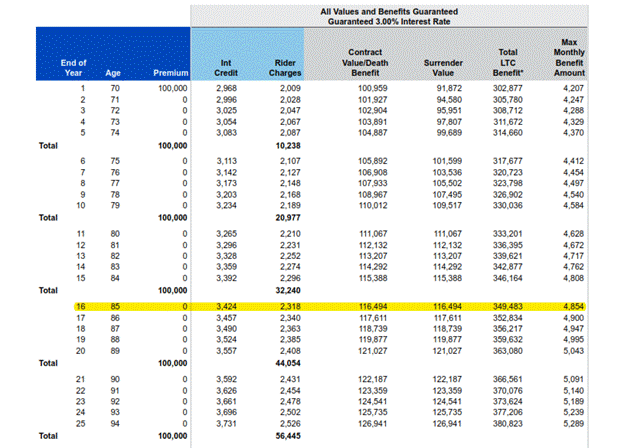
All of these illustrations assume a 70yo female, domiciled in CO, depositing 100k in non-qualified funds (cash or via 1035).
Leverage
The amount of LTC leverage on the initial deposit is largely determined by health. As we’ll show later, the health questions on most of these products are extraordinarily lenient. Most clients are going to qualify for the “best class” of each.
One of the largest LTC annuity sellers has data showing that 93% of their applicants are approved and 87% of those approved get their best rating (which equates to maximum leverage).
Here is a graphic depicting the leverage that a Nationwide hybrid LTC annuity would provide to a 70yo female at age 85, which is a likely age of claim (highlighted):
*You can download the complete illustration HERE
Taxation
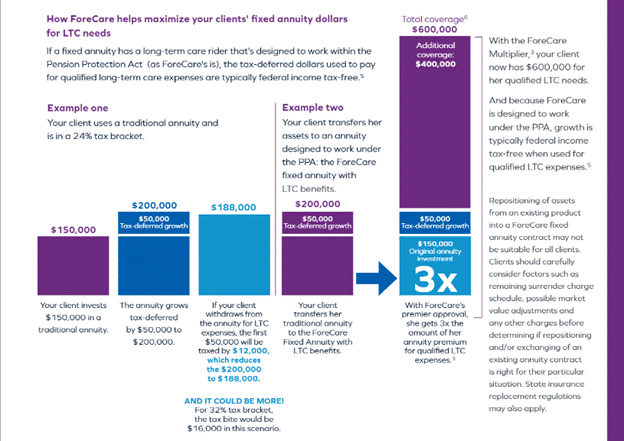
Prior to the PPA in 2006, withdrawals from a non-qualified annuity for long term care were treated no differently than if you had used the money to buy a new boat. Last in (interest), first out (ordinary income taxation).
After 2006, withdrawals from a NQ annuity for the purposes of LTC were tax free, even though the gain was being withdrawn first.
For annuities with a relatively low basis, this means that insured could unlock all of the gains that are used for long term care expenses without EVER paying taxes on that money.
Here is an example of using an existing NQ annuity with gains to fund a hybrid LTC annuity:
*You can download the entire tax flyer HERE
Growth
While not designed to have significant appreciation, these products do have interest rates built into them.
While they all have guaranteed elements, some are better than others. In addition, the non-guaranteed elements can be either indexed or fixed, depending on the carrier.
One pro and one con to these products when it comes to interest crediting:
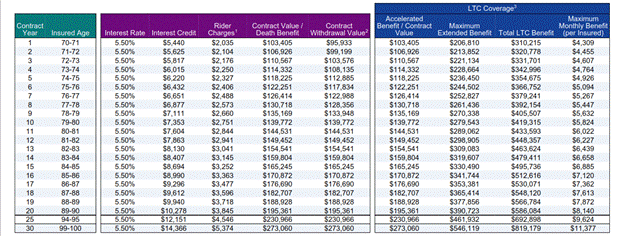
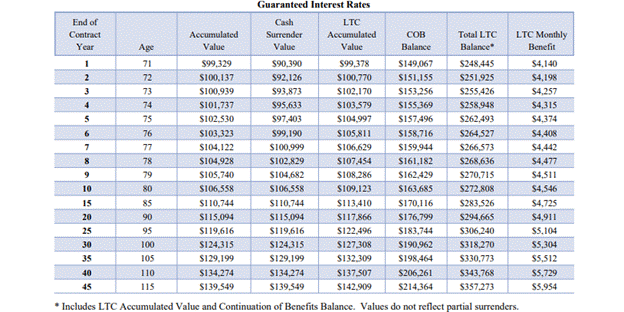
On the positive side, the interest credited will often increase your total LTC pool and monthly benefit, acting as an inflation buffer (without having to select an inflation rider, which is optional).
Here is an example using non-guaranteed elements:
*You can download the complete illustration HERE
Here is an example using guaranteed elements:
*You can download the complete illustration HERE
And here is an example using an indexed product:
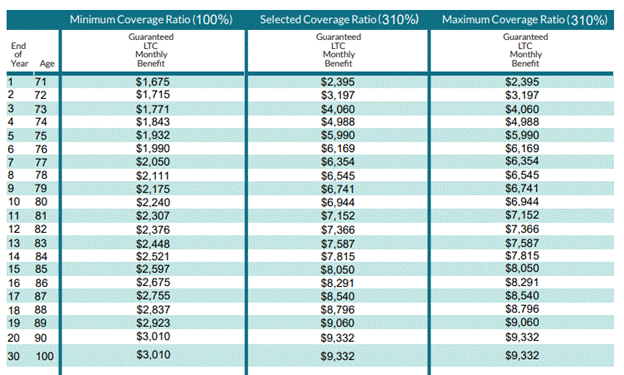
*You can download the complete illustration HERE
The downside to an LTC hybrid annuity is that the rider fees will reduce the credited interest rate. However, even in circumstances where the rider exceeds the credited interest rate, there will be no reduction of the principal (For the fees only. Withdrawals, claims, surrenders etc. all reduce principal).
Underwriting
This is where these products truly shine.
In most cases, the leverage is the same whether you’re 60 or 80 years old.
In addition these products are extremely liberal with their underwriting requirements and often issue approvals within a few days.
Normally, clients over 70 and older will have to do a cognitive exam. It’s often done over the phone and typically only takes 10-15 minutes.
Here is an example of the health questionnaire for one of these carriers:
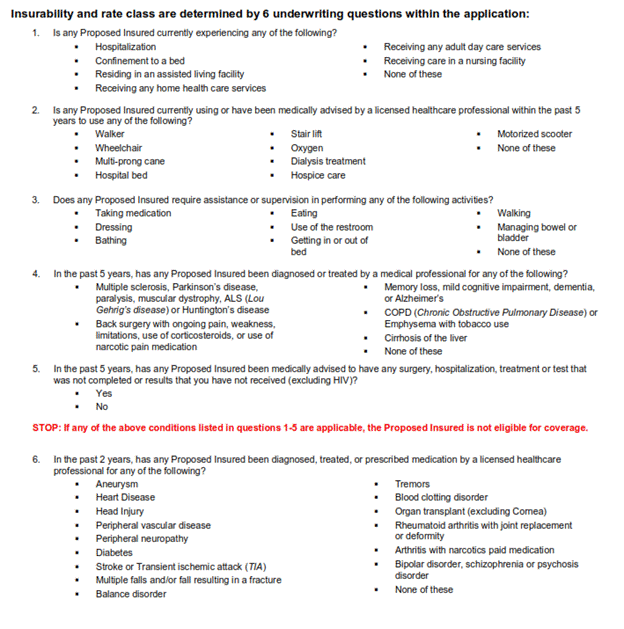
Note that in no place on this form (and this is the entire health questionnaire) does it ask about cancer. There are also a host of other health conditions, while natural for someone in their 70s to have, that are approved as well.
Hybrid life products (like Nationwide’s CareMatters, OneAmerica’s AssetCare, Securian’s SecureCare, etc.) are much more restrictive in their underwriting requirements. By not having a life insurance component (the death benefit on an LTC hybrid annuity is the annuity value, just like if it was in a MYGA), the underwriting becomes very relaxed.
Extras
As mentioned above, most hybrid LTC annuities will allow for joint insureds. They also issue underwriting decisions very quickly, 48-72 hours in most cases. There are no exams, no doctor records, and no headaches. In some cases, you can get an underwriting approval before submitting the application, saving you valuable time if the client ends up not being offered a policy.
Conclusion
There are three main markets for hybrid LTC annuities:
- Older people (67+)
- Sick people (cancer, heart issues a few years back, diabetes, etc.)
- People already in a non-qualified annuity who don’t need it for retirement.
Sometimes, clients will fit all three of these criteria. Sometimes just one or two.
Regardless, adding hybrid LTC annuities to your business will help you make more money, help your clients check off an important box in their financial plan (purchasing LTC coverage), and provide for a much larger legacy to their beneficiaries, should they need care (both from a tax standpoint and shielding other assets from spenddown).
If you’d like to explore how these products can enhance your practice or are curious about any of the points outlined in this article, please contact us today.